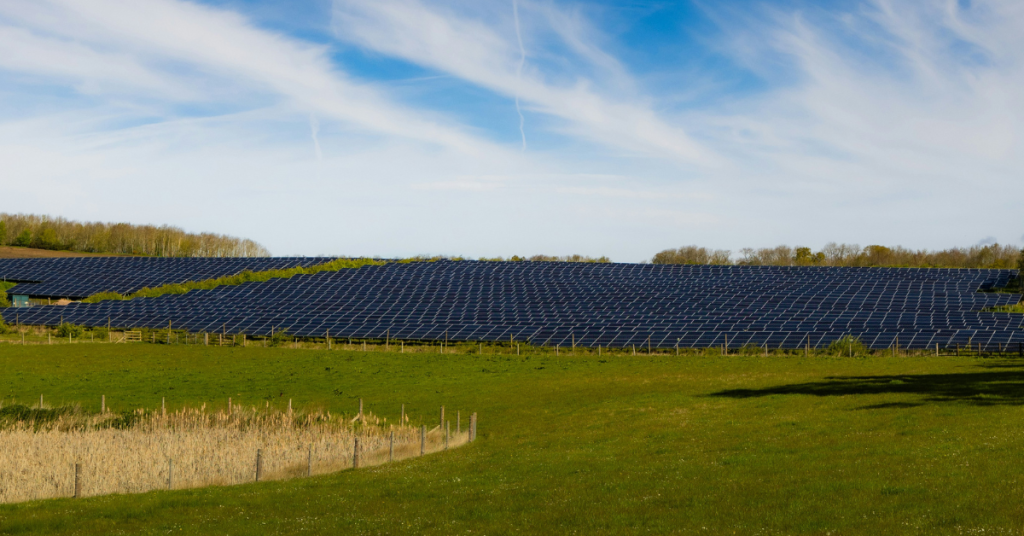
What Are Off-Grid Solar Systems?
Off-grid solar systems are a complete solution for generating and storing electricity without relying on the traditional utility grid. These systems are perfect for remote homes, cottages, or any location where grid access is unavailable or unreliable. Designed to match your unique energy needs, they provide flexibility and scalability, ensuring you can expand as your power requirements grow.
Typically, off-grid systems include:
- Storage Batteries to store excess energy for use during low solar production times, such as nighttime or cloudy days.
- Generators to provide backup power for extended periods of low solar availability.
- Inverters to convert the DC electricity generated by solar panels into AC electricity, which powers your home’s appliances. Advanced inverters may even start the generator automatically if the battery charge gets too low.
These systems offer the freedom to live sustainably, reduce dependence on fossil fuels, and maintain energy independence.
How Do Inverters Work In Off-Grid Systems?
Inverters are a critical component of off-grid solar systems, responsible for converting direct current (DC) power from your solar panels or batteries into alternating current (AC) power for household use. Unlike grid-tied systems, off-grid inverters must manage all energy flow in your home, ensuring your appliances and devices receive consistent power.
When selecting an inverter, consider the following:
- Waveform Output: Sine wave inverters produce cleaner, more reliable power for sensitive electronics, while modified sine wave inverters are more cost-effective but less efficient.
- Charger Size: Determines how quickly your batteries can recharge.
- Efficiency: Higher efficiency inverters reduce energy loss, maximizing the power you get from your solar panels.
- Warranty: A good warranty reflects product reliability and durability.
Choosing the right inverter ensures seamless operation of your off-grid system, providing power stability and peace of mind.
Why Are Batteries Important In Off-Grid Systems?
Batteries are the backbone of an off-grid solar system, acting as energy reservoirs to store electricity for use when the sun isn’t shining. Without batteries, your system would only provide power during daylight hours, leaving you without electricity at night or during overcast days.
Deep-cycle batteries are ideal for off-grid systems because they are designed to handle repeated charging and discharging. Popular options include:
- 6V Batteries like the Surrette S-600, which are affordable and perfect for smaller systems.
- Industrial Batteries like Big Red cells, offering higher capacity and a longer lifespan for larger, more demanding systems.
To maximize battery lifespan, proper charging, regular maintenance, and avoiding deep discharges are essential. A well-maintained battery system ensures consistent, reliable power for years to come.
How Much Solar Power Do You Need?
The size of your solar system depends on your household’s energy usage and specific needs. A professional installer will analyze your daily energy consumption, peak usage times, and location to design a system tailored to your requirements.
As a general guideline:
- A 1 kW Solar System produces approximately 1.5 kWh/day in December and 4.5 kWh/day in summer in Canada.
- It’s wise to invest in a slightly larger battery bank initially, as batteries cannot be expanded by mixing new and old ones.
By carefully assessing your energy needs and planning for future growth, you can build a system that meets your needs today and adapts as they evolve.
What Is A Charge Controller, And Why Is It Important?
A charge controller is a device that regulates the electricity from your solar panels to ensure your batteries are charged safely and efficiently. Overcharging can damage batteries and reduce their lifespan, making a charge controller essential for protecting your investment.
There are three main types of charge controllers:
- Series Controllers: Simple and affordable, these stop charging when a set voltage is reached.
- PWM Controllers: Provide more precise control by tapering the charge as the battery nears full capacity, extending battery life.
- MPPT Controllers: The most advanced option, these maximize energy harvest by adjusting to panel conditions and converting excess voltage into usable power. They also allow for high-voltage panels to charge low-voltage batteries, offering flexibility in system design.
Investing in the right charge controller ensures your batteries perform optimally and your system operates efficiently.
How Do You Position Solar Panels For Maximum Efficiency?
The angle and orientation of your solar panels play a significant role in their energy output. Ideally, panels should be angled to capture the most sunlight throughout the year based on your location.
In Canada:
- Winter: Tilt panels at your latitude + 15° for maximum winter output.
- Summer: Tilt panels at your latitude – 15° for summer efficiency.
For year-round use, a slightly steeper angle helps with snow shedding and improves winter production when sunlight is limited. Seasonal systems, like summer cottages, can often use the roof slope without significant loss in performance. Proper positioning ensures you get the most energy from your solar system.
How Do You Run A Refrigerator Off-Grid?
Refrigerators are one of the most energy-intensive appliances in your home, making them a key consideration for off-grid living. Modern, energy-efficient models make it much easier to integrate a fridge into your solar system.
Key points to consider:
- Energy Star-Rated Refrigerators use as little as 1.3 to 1.5 kWh/day, compared to older models requiring 3-4 kWh/day.
- A 1.5 kW Solar Array with 6 panels of 250W can power an efficient refrigerator year-round. For seasonal use (April to October), a 3-panel system may be sufficient.
Selecting a fridge with a low EnerGuide Rating minimizes energy consumption and ensures compatibility with your off-grid system, reducing strain on your batteries and solar panels.